
Why getting new windows should be a priority
Every month you wait to replace your windows is a month of warm air leaking out and cold air seeping in.
Homeowners along the Wasatch Front often put off this decision because it feels big. Still, a home window replacement project is more manageable than most people expect once you know the timeline and the financial aspects.
This guide explains why fall is the right season for residential window replacement, what it actually costs to replace your windows, and what to watch out for during the home window replacement process.
Why fall works better than spring
Sealants and caulk need moderate temperatures to cure properly. If it’s too hot, they set too fast and don’t bond correctly. If it’s too cold, they barely set at all. Fall usually gives installers that in-between window of decent weather, and that’s exactly when a residential window replacement holds up best over time.
There’s also less competition for a spot on the schedule. Spring is when snowmelt reveals every problem a house had all winter, and every window company’s phone rings at once. Fall doesn’t have that rush. Crews have more room, which means you get your pick of dates instead of whatever’s left over.
And the payoff starts immediately. Windows installed in October are already doing their job by the first hard freeze. Windows installed in April spend a whole heating season leaking before they ever help you.
How the process actually goes
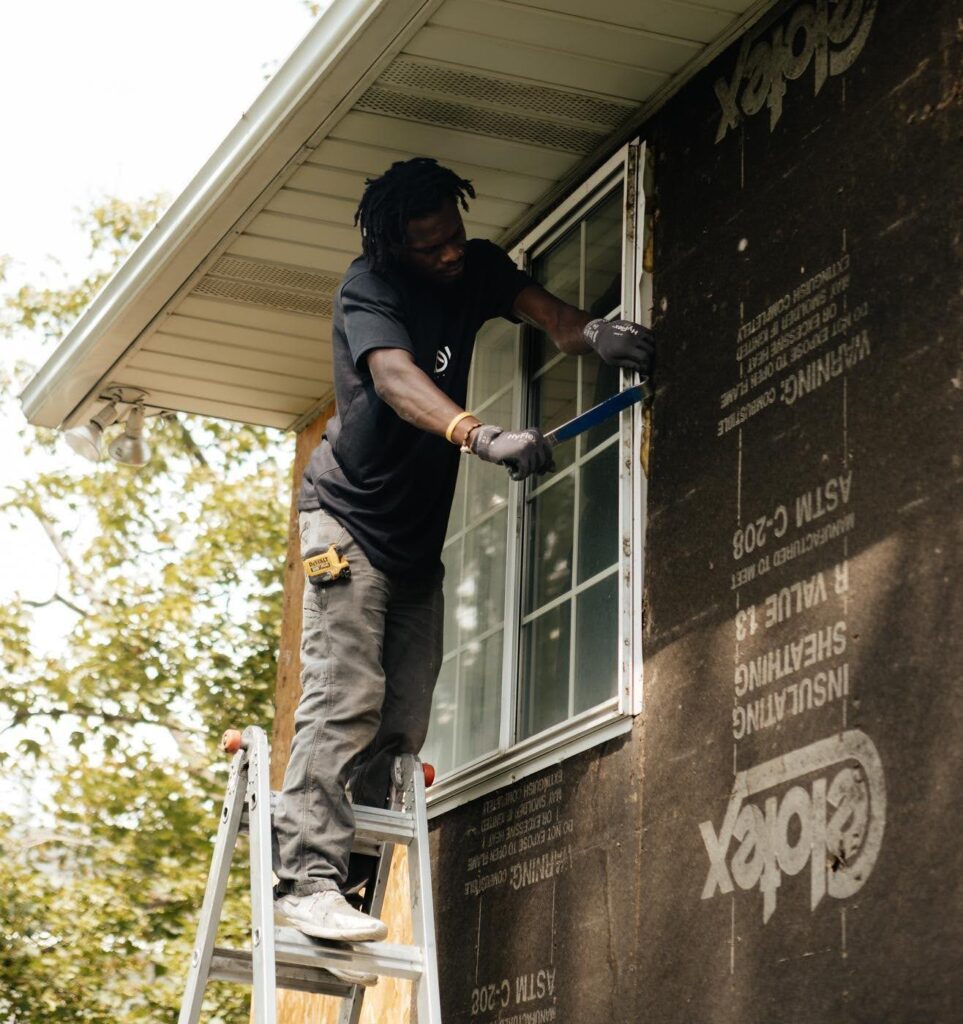
Getting your windows replaced isn’t complicated, but there’s a sequence worth knowing.
- A contractor walks through your house. They look at frame condition and glass type and examine how your current windows are performing.
- Accurate measurements get taken. Guessing here is how homeowners end up with windows that don’t fit right.
- You pick your product. Frame material, glass package, and U-factor rating are all determined by your house and budget.
- Rebate eligibility gets checked. This should happen before you buy, not after, since rebate programs have specific product requirements.
- Installation gets scheduled. For fall timing, earlier is better, as it gives you more runway before winter weather sets in.
Most homeowners can go from first phone call to finished installation in a matter of weeks, not months, especially in the fall when calendars aren’t backed up.
What this looks like in real homes
A home up at elevation with older aluminum-frame, single-pane windows behaves differently from a newer build with double-pane vinyl that recently lost its seal.
The aluminum-frame house usually loses heat through the frame itself as much as through the glass since aluminum conducts cold straight through. The newer home with a failed seal is dealing with a narrower problem: fog between the panes, but the frame and the rest of the envelope are still doing their job.
Here in Utah County, older homes with original single-pane windows tend to see the most noticeable difference after a home window replacement, simply because they had the most ground to make up. Newer homes with one or two failed units see a smaller jump in comfort, but still eliminate fogging and the cold spot by the window for good.
Why upgrading your windows matters
While upgrading your windows certainly has visual appeal, the benefits go far beyond that, saving you money and improving your resale value if you decide to sell. Here’s a rundown:
- Cuts the amount of energy your heating and cooling system has to work for
- Gets rid of drafts and cold spots near windows in winter
- Removes the fogged, cloudy look that comes with a failed seal
- Adds to your home’s resale value when it’s time to sell
- Reduces the risk of water damage that comes with long-term seal failure
- Makes a visible difference in curb appeal, especially on older homes
There’s also a comfort difference most homeowners don’t expect until it’s gone. New windows substantially cut down on outside noise. A properly sealed double-pane unit cuts outside noise from traffic and wind. It also reduces other street sounds that come through single-pane glass.
In homes along busier stretches of the Wasatch Front, that alone changes how a room feels. It’s not something a rebate program measures, but it’s often the first thing people notice after installation.
Mistakes that cost homeowners more
- Waiting for full failure
- Skipping the rebate check
- Assuming the federal tax credit still applies
- Choosing based on price alone
- Not asking about the U-factor
- Ignoring installation quality
What the numbers actually show
- Heat gain and loss through windows accounts for roughly 25–30% of a home’s heating and cooling energy use, according to Michigan State University.
- Replacing single-pane windows with ENERGY STAR-certified products can reduce heating and cooling costs by up to 13% nationwide, according to ENERGY STAR’s own figures.
- Vinyl window replacement recoups roughly 67–72% of project cost at resale, according to the 2025 Remodeling Cost vs. Value Report from Zonda.
What to look for before you sign anything
- U-factor rating: Utility rebate programs in Utah generally require a score of 0.22 or lower, so ask for this number rather than an “efficient” label.
- ENERGY STAR certification: This is the baseline most rebate programs check for.
- Frame material fit for your house. Vinyl, fiberglass, and wood all perform differently in temperature swings.
- A written, line-item quote. You should be able to see exactly what you’re paying for.
- Installer credentials. Ask who’s actually doing the install.
- Warranty terms in writing. Get the specifics on what’s covered and for how long.
FAQ
Q: How long does residential window replacement usually take?
Most single-family homes are done in one to three days for a full-house project, depending on the number of windows and frame type.
Q: Is there still a tax credit for window replacement in 2026?
No. The federal credit expired at the end of 2025. Utility rebates through Rocky Mountain Power and Enbridge Gas are still active and worth checking.
Q: Do I need to replace all my windows at once?
No. Plenty of homeowners replace their windows in phases, starting with the worst-performing rooms first.
Q: What U-factor should I be looking for?
Utah utility rebate programs generally require a rating of 0.22 or lower for ENERGY STAR-certified windows.
Ready to get this done? Contact JDI Windows
You know your windows better than anyone. If they’re drafty, fogged, or old, you don’t need another winter to confirm it. JDI Windows is a locally owned, licensed installer along the Wasatch Front. We’ll give you a straight, line-item quote and tell you honestly whether your rebate options apply before you spend a dime. Schedule your free assessment and get it done before the cold sets in.