
Window problems along the Wasatch Front rarely show up in summer. They show up on the first genuinely cold morning, as a draft you can’t trace, fog that won’t clear, or a lock that doesn’t quite catch. Left unchecked, a failing seal or a cracked bead of caulk quietly drives up heating costs all winter.
In this checklist, you’ll learn exactly what to check on every window in your home, from weatherstripping and hardware to glass condition and condensation, plus how to tell a quick fix from a job that calls for something bigger.
Whether your windows are original to the house or only a few years old, these steps will keep them performing through the coldest months.

What this kind of upkeep actually covers
A window doesn’t fail all at once. The seal loosens a little. The caulk cracks a hair. A crank works its way slack. Each of those, on its own, is barely noticeable. Put them together and add a hard freeze, and that’s when the draft shows up.
Winter window maintenance means walking through that list on purpose instead of waiting for the cold to do it for you. Most of it is looking closely at something you normally walk past.
Catching a hairline gap in October costs a tube of caulk and ten minutes. Catching the same gap in January, mid-freeze, costs a lot more in comfort, in the heating bill, and sometimes in a repair call that could have waited until spring.
The checklist: what to check, in order
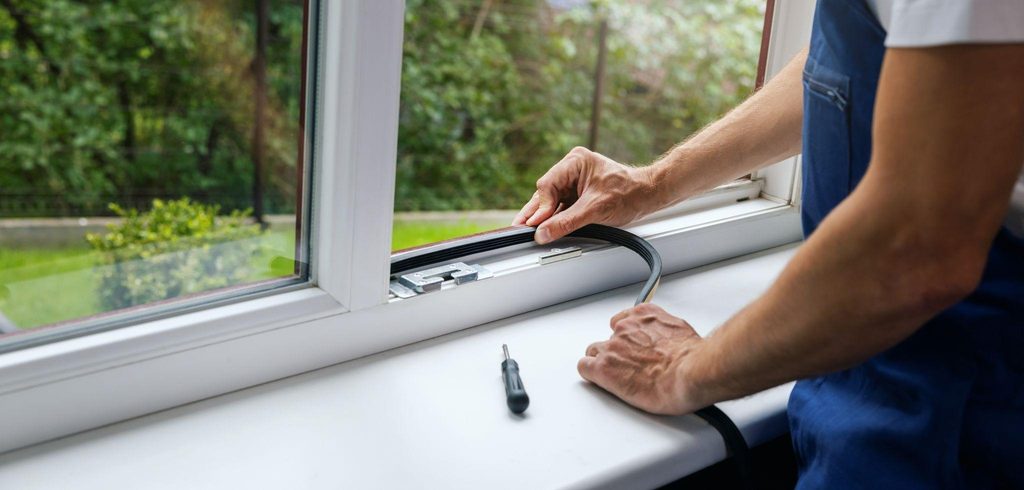
Run your hand around the frame. Close the window and feel along the edge, inside and out. Cold air on your palm means the seal isn’t sealing anymore.
Look for fog between the panes. On a cold morning, check the glass on any double-pane window. Haze trapped between the panes means the seal has failed, and the insulating gas fill is gone.
Inspect the caulk outside. Sun in summer and ice in winter both work against exterior caulk. Cracked or chalky caulk is an easy fix now (and a much colder fix in January).
Test the locks and cranks. A window that doesn’t latch tight isn’t pulling its seal closed, either. Loose hardware on older casement windows is easy to overlook.
Watch the inside glass for condensation. Some fog on the inside during a cold snap is normal, especially in homes up at elevation where indoor humidity runs higher against cold glass. Condensation every single morning, or pooling on the sill, is a different story.
Clear the tracks and weep holes. Fall debris builds up fast. On vinyl windows, clogged weep holes hold water against the frame all winter instead of draining it.
What this looks like in Utah Valley homes
Older homes with original single-pane or early double-pane windows tend to show seal failure first. Newer builds usually have the opposite problem: good glass, but hardware and weatherstripping that haven’t been checked since the house was finished.
Homes higher up the bench see condensation more often simply because the temperature difference between indoor and outdoor air is greater. It’s what the checklist tends to turn up, depending on when the windows went in and how high up the house sits.
Why maintenance pays off
- Catches seal failure before it spreads to the rest of the window
- Keeps hardware working the way it’s supposed to, instead of forcing a workaround
- Costs a fraction of what an emergency repair runs
- Makes it obvious, early, whether a window needs a fix or a full residential window replacement
- Keeps heat where it belongs during the coldest months
Mistakes to avoid
- Blaming the glass for a frame problem. Most drafts come from the seal or the caulk, not the glass. Replacing a window over a caulking issue is money spent on the wrong fix.
- Checking on a mild, windless day. A frame won’t tell on itself without a real temperature difference to expose it. Early morning in the cold is when this check actually works.
- Mixing up normal and abnormal condensation. Morning fog on the inside of the glass is humidity meeting cold glass. Constant fog, or moisture between the panes, is a different problem entirely.
- Checking only the window you already suspect. Seals fail one at a time. A window that was fine last year isn’t guaranteed to be fine this year.
- Caulking over a failed seal. Caulk fixes gaps in the frame. It does nothing for glass that’s already lost its seal.
- Skipping the hardware. Locks and cranks get overlooked in favor of glass and frames, even though loose hardware can undo an otherwise fine seal.
What you’ll need, and when it’s time for replacement instead
A basic kit covers most of this list: exterior-grade caulk, a caulking gun, weatherstripping, a small screwdriver, and a shop vacuum for tracks and weep holes. None of it is specialized, and none of it requires taking a window apart.
What it can’t fix is a failed insulated glass unit, a warped frame, or a window patched over so many times that the hardware won’t hold an adjustment. At that point, residential window replacement is the only solution that actually solves the problem instead of managing it for another year.
Frequently asked questions
Q: How often should I do winter window maintenance?
Once a year, ideally in early fall before the first hard freeze. Homes with older windows or heavy sun exposure sometimes benefit from a midwinter check, too, especially after a stretch of extreme cold.
Q: Can I do this myself, or do I need a professional?
Most of this checklist is homeowner-friendly. Caulk, weatherstripping, and hardware checks don’t require special tools. Fogged glass or a failed seal is a different matter, since that points to a manufacturing or installation issue rather than wear and tear.
Q: Does this actually lower my heating bill?
It won’t lower a bill the way a full replacement can, but it stops a bill from climbing due to a preventable draft or gap. Maintenance protects the performance you already have.
Q: How do I know if I need residential window replacement instead of a repair?
If the glass itself has fogged between the panes, if the frame has warped, or if hardware won’t hold an adjustment anymore, that’s a replacement conversation. If it’s caulk, weatherstripping, or a loose crank, that’s maintenance.

Get it done before the freeze with JDI Windows
Winter window maintenance is a handful of checks that take an afternoon and save a lot more than an afternoon’s worth of trouble once the cold sets in. Most of what shows up on this list is fixable with caulk, weatherstripping, and a little attention.
The rest — fogged glass, warped frames, hardware that won’t hold — is worth a second opinion before winter gets any further along.
If you’ve gone through this checklist and something still doesn’t add up, we’re happy to take a look. A straight answer is the point. If it’s a repair, we’ll say so. If it’s time for a residential window replacement, we’ll tell you that too, along with what’s actually driving the recommendation.
We work on homes across Utah County, from original single-pane windows to newer builds that need their hardware tightened up. Explore our window services or request a free inspection, and we’ll walk you through the same checklist in person, then tell you plainly what we find.Contact JDI Windows today to get started.